Tesla Autopilot: Everything You Need to Know About FSD and Safety in 2026
Tesla Autopilot has evolved from an experimental feature into the industry standard that every automaker now chases. The system runs entirely on vision-based AI, processing real-world data from millions of vehicles across the globe. This represents a fundamental shift in how cars understand roads, navigate traffic, and respond to driver commands.
What is Tesla Autopilot and How Does It Actually Work?
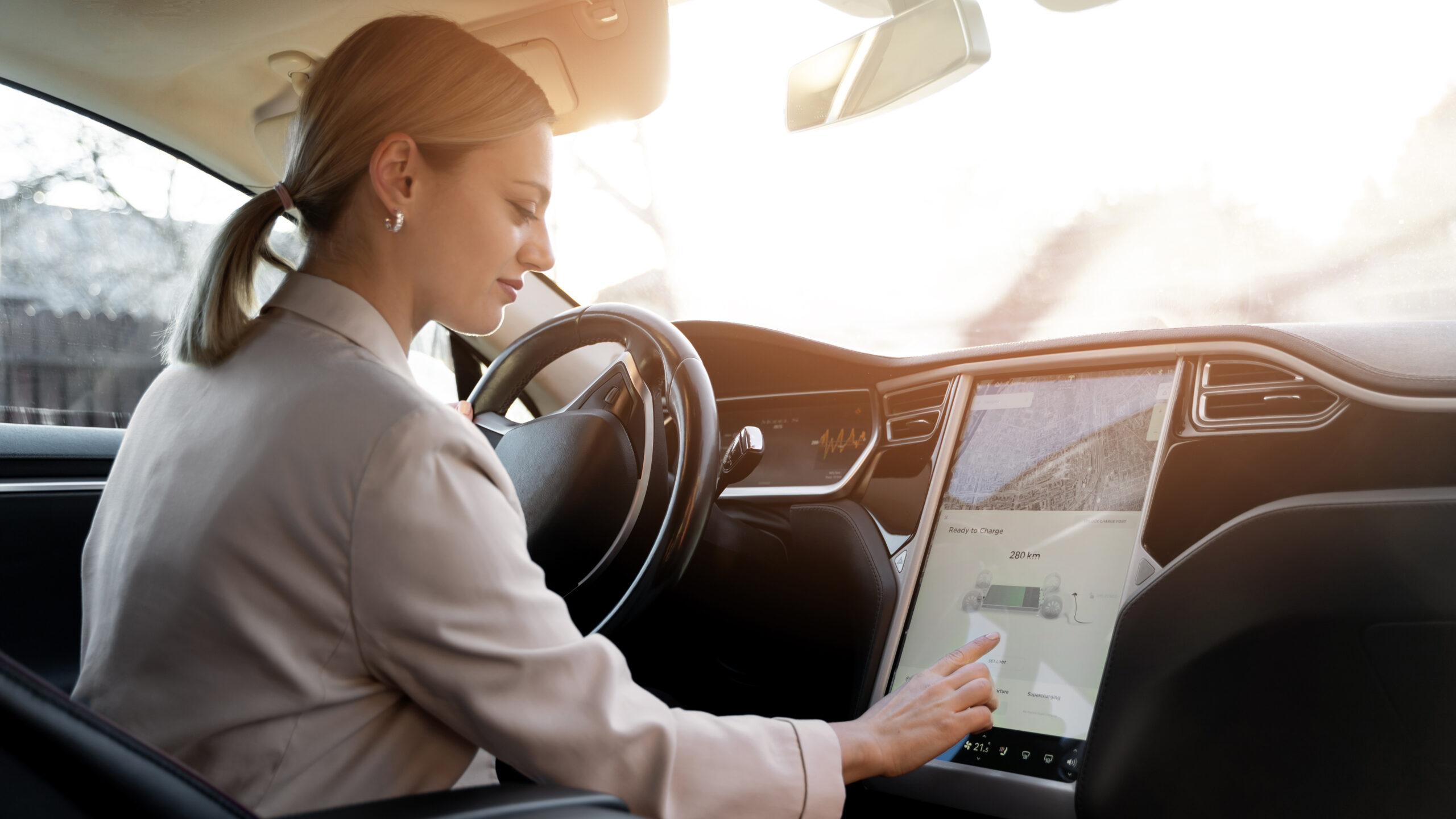
Tesla Autopilot is an advanced driver assistance system included on every Tesla manufactured after September 2014. The technology relies exclusively on cameras—no radar, no ultrasonic sensors. Eight high-resolution cameras provide complete 360-degree coverage, feeding continuous data into Tesla’s FSD Computer 2.
The Two Core Features
Traffic-Aware Cruise Control (TACC) automatically matches your speed to surrounding traffic, managing complete stops and smooth accelerations. Autosteer maintains the vehicle’s position within lane markings while TACC handles speed adjustments. These features work together to reduce driver fatigue during extended highway trips significantly.
Basic Autopilot vs Full Self-Driving (Supervised)
The standard package includes TACC and Autosteer on any clearly marked road. Full Self-Driving adds automatic lane changes, Navigate on Autopilot for highway navigation, traffic light and stop sign recognition, and city street steering. Despite the ambitious name, FSD remains a Level 2 system requiring constant driver supervision.
FSD (Supervised) costs $8,000 as a one-time purchase or $99 per month as a subscription. The monthly option makes better financial sense for most drivers—it takes nearly seven years of payments to equal the upfront cost, and FSD typically adds only $2,500 to resale value.
Hardware 4: The Camera-Only Revolution
Tesla eliminated radar and ultrasonic sensors, committing to camera-based perception. Hardware 4 (HW4) delivers processing power three to eight times greater than previous generations, handling 1.3 gigapixels per second with virtually zero latency.
The eight-camera system creates a comprehensive environmental map. Front-facing cameras manage long-range highway vision, side cameras handle intersections and lane changes, and rear cameras monitor blind spots and reversing maneuvers. This complete visual feed powers the neural networks, making instant driving decisions.
The Neural Network Revolution: FSD Versions 12-14
The most significant technical advancement arrived with FSD v12’s transition to end-to-end neural networks. Tesla replaced approximately 300,000 lines of manually coded instructions with a unified AI model that learns by observing human driving behavior.
How the System Actually Learns?
Traditional systems operate on rigid programming: “If pedestrian detected, execute braking sequence.” The new architecture analyzes millions of hours of human driving footage and develops its own understanding of appropriate responses. The car masters subtle maneuvers like creeping forward at congested intersections to communicate intent—behaviors nearly impossible to code manually.
The processing pipeline works as follows:
- Input: Eight cameras stream raw video data continuously into the processing system.
- Processing: Forty-eight specialized neural networks analyze depth perception, object velocity, and environmental context simultaneously.
- Output: Direct control commands for steering, braking, and acceleration without intermediate rule verification.
The World Model and Predictive Intelligence
FSD v13 and v14 introduced the “World Model” capability—the system doesn’t just perceive the current moment, it simulates probable futures. When cameras detect a pedestrian staring at their phone near the curb, the system calculates the likelihood they’ll step into traffic and reduces speed proactively.
This predictive capability distinguishes Tesla from competitors. Where other systems react to hazards after they occur, FSD anticipates them before they develop. The outcome is smoother, more natural driving that feels intuitive to passengers.
Tesla Autopilot Safety: Examining the Real Data
Tesla claims vehicles operating with Autopilot engaged are ten times safer than average American cars. The actual situation requires deeper analysis.
The 2025-2026 Safety Numbers
Tesla’s Q3 2025 data reported one crash per 6.36 million miles with Autopilot active, compared to the national average of one crash every 702,000 miles. Earlier in 2025, Q1 recorded 7.44 million miles per crash, while Q2 showed 6.69 million miles per crash.
The data reveals slight safety regression throughout 2025, though Tesla still dramatically outperforms federal baselines. Tesla counts any crash where Autopilot deactivated within five seconds of impact, capturing scenarios where drivers intervened at the final moment.
Why the “10x Safer” Claim Needs Context?
Autopilot operates primarily on limited-access highways—statistically the safest road environments. Comparing highway miles with Autopilot to national averages, including dangerous urban intersections, creates inherently skewed comparisons.
Tesla drivers also represent a demographic with lower crash rates: tech-enthusiasts driving newer vehicles with higher average incomes. When comparing Teslas using Autopilot to Teslas driven manually on identical highways, the safety advantage drops to approximately 5x—still substantial, but not the marketed figure.
Phantom Braking: Why This Issue Persists in 2026?
Phantom braking happens when the vehicle unexpectedly applies brakes without an apparent cause. Despite years of software refinements, this remains a documented concern for many owners.
Common Trigger Scenarios
Sharp shadows cast by highway overpasses can register as solid barriers to the camera system, triggering emergency braking. Large trucks drifting slightly toward lane boundaries in adjacent lanes often generate false collision warnings. Map database errors sometimes convince the car that speed limits dropped from 70 mph to 35 mph, causing sudden deceleration.
Vehicles parked on road shoulders or pedestrians who’ve already cleared the travel lane also trigger false positives. The vision-only system occasionally misinterprets stationary objects as active threats requiring immediate response.
Strategies to Reduce Phantom Braking
Increase the follow distance setting through Controls > Autopilot > Follow Distance to provide the system with additional reaction time and gentler braking responses. Use the “Report Bug” voice command immediately after phantom braking events—this transmits diagnostic data directly to Tesla’s engineering team for neural network retraining.
No permanent user-accessible fix exists, but these adjustments demonstrably reduce event frequency.
Understanding Autopilot Feature Tiers
Tesla streamlined its product lineup in 2024 by removing the $6,000 Enhanced Autopilot option from most markets, leaving Basic Autopilot (included with vehicle purchase) and FSD (Supervised) at $8,000 or $99 monthly.
What Each Level Provides?
Basic Autopilot delivers adaptive cruise control and lane centering on any road with visible lane markings. This handles the majority of highway driving demands effectively.
FSD (Supervised) adds automatic lane changes, Navigate on Autopilot for complete highway navigation, Autopark functionality, Smart Summon, city street steering capability, and traffic light/stop sign control. These features operate on both highways and urban roads.
Owners with legacy Enhanced Autopilot packages can upgrade to full FSD for $2,000, accessing the latest v13 and v14 neural networks unavailable on older software architectures.
Regulatory Challenges: NHTSA and California DMV
Tesla faces intensifying regulatory scrutiny in 2026. Multiple investigations could mandate recalls or restrict specific software capabilities.
The NHTSA Investigation (PE25012)
The National Highway Traffic Safety Administration initiated a preliminary evaluation covering 2.8 million Tesla vehicles in late 2025. The investigation examines reports of FSD running red lights or executing lane changes into opposing traffic. The agency has documented 62 formal complaints and multiple injuries resulting from these incidents.
This investigation directly challenges Tesla’s core value proposition—reliable urban street navigation. A determination of systemic defects could require extensive hardware or software modifications costing billions of dollars.
California’s False Advertising Lawsuit
The California DMV is pursuing legal action against Tesla regarding the “Autopilot” and “Full Self-Driving” terminology, alleging these names create misleading perceptions about actual system capabilities. The DMV seeks a 30-day suspension of Tesla’s dealer license, which would severely disrupt deliveries in the company’s most significant state market.
Tesla contends that persistent warnings requiring driver attention outweigh naming considerations. However, expert testimony increasingly suggests the marketing language itself encourages unsafe driver behaviors, an argument gaining momentum in courtrooms.
Tesla vs Ford BlueCruise and GM Super Cruise
Consumer Reports currently ranks Ford’s BlueCruise as the highest-rated driver assistance system, with Tesla’s Autopilot scoring lower across multiple evaluation categories.
The Critical Differences
Ford BlueCruise achieved an 84-point score, GM Super Cruise earned 75 points, and Tesla Autopilot received 61 points in Consumer Reports’ most recent assessment. The scoring methodology evaluates capability, user experience, and safety monitoring effectiveness.
Ford and GM implement geofenced strategies—their hands-free systems operate exclusively on roads meticulously pre-mapped with LIDAR technology. Tesla permits operation anywhere, offering greater versatility but introducing higher error potential on unmapped routes.
Both Ford and GM deploy infrared gaze-tracking cameras that function effectively even when drivers wear sunglasses. Tesla’s cabin camera has improved substantially but continues struggling in low-light environments, making driver attention monitoring slightly less dependable.
The fundamental tradeoff remains clear: Ford and GM provide superior safety monitoring on limited road networks, while Tesla delivers broader operational capability with increased driver responsibility.
The Robotaxi Future: Where Tesla Heads in 2026
Elon Musk has predicted unsupervised self-driving capability since 2018. Throughout 2026, Tesla is actively testing dedicated Robotaxi deployments, though the definition has evolved from “sleep while driving” to “advanced assistance with minimal oversight.”
Hardware 5 and the 10 Billion Mile Target
Industry experts estimate actual Level 4 or Level 5 autonomy requires approximately 10 billion miles of validated driving data. Tesla surpassed 7 billion miles in early 2025, positioning itself to reach that milestone during 2026.
Hardware 5 (AI5) will deliver the final computational advancement required for full autonomy, featuring substantially enhanced processing power and superior sensor resolution compared to current systems.
The Safety Monitor Approach
Throughout 2026 testing, Tesla is deploying Robotaxis without in-vehicle drivers, accompanied by safety monitors in trailing vehicles. This demonstrates that while the system handles 99.9% of typical driving scenarios, edge cases like unusual construction configurations or unpredictable jaywalkers still require human safety oversight.
Final Assessment: Is Tesla Autopilot Worth It in 2026?
Tesla Autopilot represents the most sophisticated consumer driving software currently available, though it carries notable limitations. The end-to-end neural network architecture produces more natural, less mechanical driving behavior, yet phantom braking persists, and regulatory pressure continues intensifying.
For drivers managing demanding daily commutes, FSD (Supervised) genuinely reduces stress and physical fatigue. The system handles monotonous highway segments and stop-and-go traffic with impressive capability.
However, anyone anticipating the ability to sleep during transit or complete work tasks is purchasing an unfulfilled promise. Approach the system as an advanced co-pilot requiring constant supervision, not a driver replacement.
The monthly $99 subscription delivers superior value compared to the $8,000 one-time purchase for most users. You maintain flexibility to cancel if software updates disappoint, and you avoid the significant depreciation impact when selling the vehicle.