How to Remove Scratches from a Car: Complete 2026 Guide
Scratches on your car’s paint are more than just an eyesore. They expose the metal underneath to moisture, leading to rust and significant depreciation in your vehicle’s value. Learning how to remove scratches from car surfaces yourself can save you hundreds of dollars in body shop fees while restoring your vehicle’s appearance to near-showroom condition.
Understanding Car Paint Layers and Scratch Types
Before you grab any products, you need to understand what you’re working with. Modern automotive paint consists of multiple layers, and the repair method depends entirely on which layer is damaged.
Your car’s paint system has four main layers:
- E-Coat (Electro-Coating): Applied directly to the metal, this layer prevents rust. It’s the foundation that keeps your car’s body protected.
- Primer: Creates a smooth surface for paint adhesion. This layer is typically gray or white.
- Base Coat: This is your car’s actual color. It contains the pigments and metallic flakes that give your vehicle its appearance.
- Clear Coat: The transparent protective layer on top. This 40-60 micrometer thick layer takes most of the abuse from the environment.
Most scratches you’ll encounter only affect the clear coat. This is good news because clear coat damage is the easiest and cheapest to fix yourself.
How to Remove Scratches from a Car?
The fingernail test tells you exactly how deep a scratch goes. Run your fingernail perpendicular across the scratch.
No catch: The scratch is in the clear coat only. You can fix this with polishing compound.
Slight catch: The scratch is deeper in the clear coat. You’ll need wet sanding followed by polishing.
Definite catch: The scratch has reached the base coat (color layer). You’ll need touch-up paint.
You see bare metal or primer: This requires primer, paint, and clear coat application.
There’s another quick test. Spray water on the scratch. If it disappears when wet, it’s in the clear coat. If you see a different color (gray, white, or the primer shade) when dry, the scratch is through to deeper layers.
Materials You Need for Scratch Removal
Using the wrong products causes more damage. Here’s what actually works according to automotive detailing professionals in 2026:
For Clear Coat Scratches:
- pH-neutral car wash soap.
- Microfiber wash mitts and towels.
- Clay bar kit.
- Isopropyl alcohol (70% or higher).
- Rubbing compound (heavy cut).
- Polishing compound (fine cut).
- Foam applicator pads.
- Dual-action polisher (optional but recommended).
For Deep Scratches:
- 2000-grit and 3000-grit wet sandpaper.
- Automotive touch-up paint (exact color match).
- Automotive primer (if metal is exposed).
- Clear coat in a pen or small bottle.
- Ultra-fine artist’s brush or toothpick.
The total cost for DIY clear coat repair runs $15-50. Deep scratch repair costs $30-100. Compare this to Body Shop prices of $200-600 for the same work.
How to Remove Scratches from a Car’s Clear Coat?
Evident coat scratches are the most common type. They happen from automatic car washes, improper drying techniques, or light contact with objects. Here’s how to fix them.
Step 1: Wash and Decontaminate
Dirt acts as an abrasive during polishing. Wash your entire car using the two-bucket method—one bucket for soap, one for rinsing your mitt. This prevents you from grinding dirt into the paint.
After washing, use a clay bar. Run it across the wet paint surface using a clay lubricant. The clay picks up embedded contaminants like industrial fallout, brake dust, and rail dust that you can’t see but can feel as rough spots.
Wipe the area with isopropyl alcohol. This removes any wax, sealants, or oils that would prevent the compound from working properly.
Step 2: Apply Rubbing Compound
Put a quarter-sized amount of rubbing compound on a foam applicator pad. If you’re using a drill attachment like the Meguiar’s Scratch Eraser Kit, apply the compound in an X pattern on the pad.
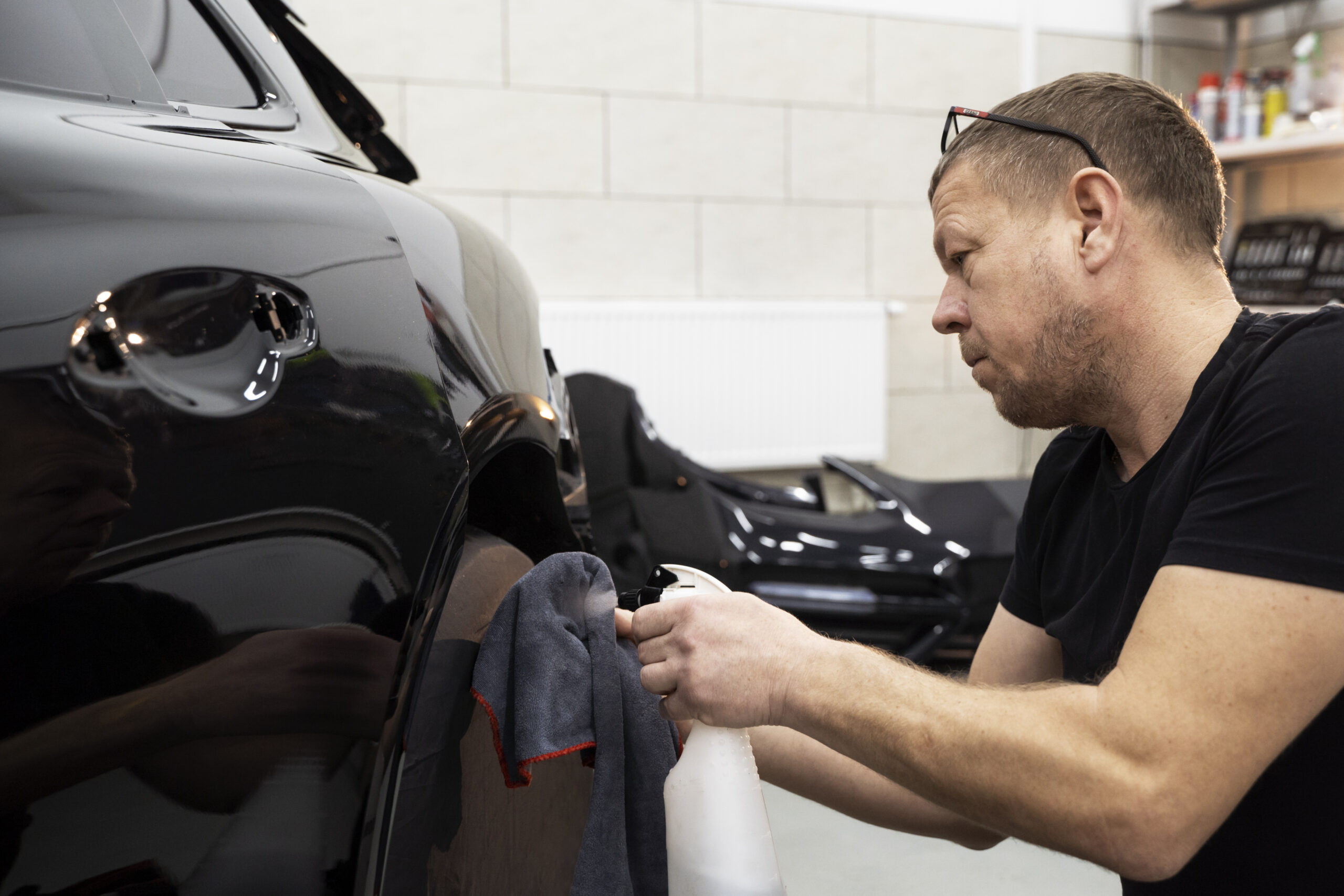
Work the compound into the scratch using firm, overlapping circular motions. Apply moderate pressure—you’re trying to level the clear coat around the scratch. The friction generates heat, which helps the abrasives work.
If working by hand, spend 45-60 seconds on a single section. If using a machine polisher, keep the pad flat against the panel and move constantly. Staying in one spot generates too much heat and can burn through the clear coat.
Step 3: Check Your Progress
Wipe away the compound residue with a clean microfiber towel. Inspect the scratch under good lighting. If it’s still visible, repeat the compounding process.
Most light scratches disappear after 2-3 applications. Deeper, clear coat scratches might need 4-5 rounds of compounding.
Step 4: Polish for Clarity
Rubbing compound leaves behind fine scratches called hazing. Remove this with polishing compound using the same circular motion technique.
Polishing compound has finer abrasives that restore the glass-like clarity to your clear coat. This step is essential—without it, your repair will look dull and cloudy.
Apply a small amount to a clean foam pad and work it into the area for 30-45 seconds. Buff off the residue and inspect. The area should now match the surrounding paint’s shine.
Step 5: Protect Your Work
Apply a coat of wax or ceramic sealant to the repaired area. This protects the fresh, clear coat and blends the repair with the rest of the panel.
Best Products for Scratch Removal in 2026
Testing by automotive detailing experts in 2025-2026 identified these products as the most effective:
Meguiar’s Quik Scratch Eraser Kit ($22-28): Best overall for clear coat scratches. Includes drill-mounted pads that cut your work time by 70%. The compound uses diminishing abrasives that break down as you work, reducing the risk of adding new scratches.
Chemical Guys VSS Scratch & Swirl Remover ($18-24): Best for black cars. This one-step formula works as both a compound and a polish. It uses 2500-grit abrasives that remove scratches without leaving haze or holograms that show up badly on dark paint.
Turtle Wax Premium Grade Scratch Repair Kit ($35-45): Best for deep scratches. Includes everything you need: sandpaper, compound, polish, clear coat pen, and detailed instructions. The included repair pen makes filling deep scratches much easier than using a bottle and brush.
Formula 1 Scratch Out ($8-12): Best budget option. Simple paste formula that works on light surface scratches. It won’t fix serious damage, but it’s perfect for removing light scuffs from parking lot contact.
Carfidant Ultimate Scratch Remover ($20-26): Best for beginners. The formula is very forgiving—hard to mess up. It buffs off easily without leaving residue, and the included applicator pad is better quality than most competitors.
How to Remove Scratches from the Car Base Coat?
When a scratch goes through the clear coat into the color layer, you need to add new paint. This repair requires more patience but is still very doable at home.
Preparation Phase
Clean the scratch area thoroughly. Use isopropyl alcohol on a microfiber cloth to remove all contaminants.
If the scratch has rough edges, smooth them with 2000-grit wet sandpaper. Dip the sandpaper in water and gently sand the edges using light pressure. This creates a smooth valley for the new paint to fill.
Applying Primer (If Needed)
If you see bare metal, you must apply primer first. Rust forms quickly on exposed metal—sometimes within 24 hours in humid conditions.
Use a toothpick or ultra-fine brush to apply automotive primer to the bare metal only. Apply three thin coats, waiting 15-20 minutes between each coat. Thin coats prevent the “blob” effect, where too much product creates a raised area.
Let the primer cure for at least 2 hours before moving to the next step.
Applying Base Coat (Color)
Get the exact paint code for your car. It’s usually on a sticker in the driver’s door jamb or glove box. In 2026, apps like ColorMate AI and Paint Code Scanner can analyze a photo of your car and identify the exact factory color code.
Shake the touch-up paint bottle vigorously for 2-3 minutes. The pigments settle at the bottom, and inadequate mixing leads to color mismatch.
Use a toothpick or ultra-fine artist’s brush to apply paint to the scratch. Build up thin layers rather than trying to fill it in one application. Each layer should be slightly higher than the surrounding paint—you’ll sand it down later.
Wait 30 minutes between coats. Apply 3-5 thin coats until the paint is slightly raised above the surface.
Let the paint cure for 24 hours. Some automotive paints need 48 hours in temperatures below 70°F (21°C).
Sealing with Clear Coat
Apply automotive clear coat over the dried color paint. Use the same thin-layer technique—2-3 coats with 20-minute drying times between each.
Clear coat provides UV protection and prevents the color from fading. Without it, your repair will look dull and oxidize quickly.
Leveling and Polishing
After 24-48 hours of curing time, the repair area will be slightly raised. Wet sand with 3000-grit sandpaper using very light pressure. Check your progress frequently—you’re aiming to make the repair flush with the surrounding paint.
Once level, polish the area using the same compound and polish technique described in the clear coat section. This restores the shine and blends the repair invisibly with the factory paint.
Home Remedies: What Actually Works?
The internet suggests many household solutions for how to remove scratches from car paint. Here’s what the testing shows:
Toothpaste: Works on extremely light, clear coat scratches (Level 1A only). Use non-gel white toothpaste with mild abrasives. The results are temporary because toothpaste lacks the protective oils found in real automotive polish. It’s a quick fix before a car viewing, but not a permanent solution.
Baking Soda Paste: A 50/50 mix of baking soda and water creates an abrasive paste. It can remove very light scratches but often leaves the area looking dull and hazy. You’ll need proper polish afterward to restore the shine, which defeats the purpose of using a “free” household item.
WD-40: Does not remove scratches. It temporarily fills them with oil, which changes how light reflects off the surface. The scratch reappears once the oil evaporates or washes away. Worse, the oil residue prevents touch-up paint from adhering properly if you attempt a real repair later.
Magic Eraser: Absolutely avoid this. Magic Erasers are extremely abrasive melamine foam. They remove paint layers aggressively, turning small scratches into large dull patches that require professional repainting.
The verdict: Stick with products designed for automotive paint. They cost $10-30 and actually work without causing additional damage.
Cost Analysis: DIY vs Professional Repair
Understanding the financial impact helps you make informed decisions about scratch repair.
A vehicle with visible scratches loses 5-30% of its resale value depending on severity. For a $25,000 car, that’s $1,250 to $7,500 in lost value.
Clear Coat Scratch Repair Costs:
- DIY: $15-50 in materials.
- Body Shop: $75-150 per panel.
- Your Savings: $60-100 per repair.
Base Coat (Paint Layer) Scratch Costs:
- DIY: $30-100 in materials.
- Body Shop: $200-600 per panel.
- Your Savings: $170-500 per repair.
Deep Scratch (Primer/Metal) Costs:
- DIY: $50-150 in materials.
- Body Shop: $800-2,500+ per panel.
- Your Savings: $750-2,350 per repair.
Body shops charge premium rates because they use specialized equipment like spectrophotometers for perfect color matching and climate-controlled paint booths for dust-free curing. For most older vehicles (5+ years), a careful DIY repair delivers 85-95% of the visual quality at 10% of the professional cost.
Preventing Future Scratches: 2026 Best Practices
Once you’ve repaired your car’s scratches, prevention becomes the priority. The detailing industry has advanced significantly in protective technologies.
Ceramic Coatings: Liquid polymer coatings that chemically bond to your paint, creating a hard, hydrophobic layer. Quality ceramic coatings like Gtechniq Crystal Serum or CarPro Cquartz last 2-5 years and provide exceptional scratch resistance. They cost $50-150 for DIY application or $500-1,500 for a professional application.
Paint Protection Film (PPF): Clear urethane film applied to high-impact areas like the hood, fenders, and bumpers. Modern PPF has self-healing properties—minor scratches disappear when exposed to heat from the sun or a heat gun. Full-front PPF installation costs $1,500-3,000 but prevents thousands in paint damage.
Graphene Coatings: The newest technology in 2026. Graphene-enhanced coatings offer superior hardness and heat resistance compared to traditional ceramic coatings. Products like Adam’s Graphene Coating show promising durability in independent testing.
Proper Washing Techniques: Most scratches come from improper washing. Never use automatic car washes with brushes—they cause thousands of micro-scratches. Always use the two-bucket method with grit guards. Dry your car by blotting with microfiber towels, not dragging them across the paint.
AI Technology in Scratch Repair
Artificial intelligence is transforming DIY automotive restoration in 2026.
AI Color Matching Apps: Apps like Paint Code AI and ColorSnap Automotive analyze a photo of your car in natural daylight and identify the exact factory paint code. They also account for paint fade from UV exposure, suggesting whether to use the original code or a slightly adjusted shade for better color matching on older vehicles.
Digital Paint Thickness Gauges: Bluetooth-enabled thickness gauges connect to smartphone apps that track exactly how much clear coat remains after each polishing session. This prevents “burn-through,” where you accidentally polish through all the clear coat to the base paint. Knowing you have only 25-30 micrometers of clear coat left prevents costly mistakes.
AR Repair Guidance: Augmented reality apps overlay step-by-step repair instructions directly onto your car’s surface through your smartphone camera. These apps guide you through the exact motions for compounding and polishing, significantly reducing the learning curve for first-time DIYers.
Common Mistakes That Ruin Repairs
Even with the right products, these errors cause problems:
Skipping the Decontamination Step: Attempting to polish without clay bar treatment picks up dirt particles and turns them into high-speed abrasives during buffing. This creates hundreds of new swirl marks that are harder to fix than the original scratch.
Applying Too Much Heat: Staying in one spot with a machine polisher for more than 3-4 seconds generates excessive heat. This softens the clear coat, causing it to smear rather than level properly. Always keep the polisher moving and check the panel temperature with your hand—it should feel barely warm, not hot.
Working in Direct Sunlight: Heat accelerates chemical evaporation. Your compound will dry on the paint before you can work it properly, potentially etching the surface. Always work in shade or indirect light with panel temperatures below 80°F (27°C).
Using Circular Motions Only: Professional detailers use overlapping circular patterns followed by straight line motions in the final passes. This prevents circular holograms from forming, especially on dark-colored cars.
Over-Sanding: When wet sanding deep scratches, checking your progress every 10-15 seconds prevents you from removing too much material. Once you’ve leveled the scratch, stop immediately. Excessive sanding thins the clear coat unnecessarily.
When to Choose Professional Repair?
Some situations warrant professional help:
Scratches on plastic bumpers: Modern plastic bumpers are flex-painted, which requires special repair techniques. The paint must flex with the bumper, and standard touch-up paint will crack.
Scratches through multiple panels: When a scratch crosses body lines (like from fender to door), color matching becomes critical. Professionals have spectrophotometers that analyze the exact pigment formulation needed for invisible repairs.
Scratches on aluminum panels: Luxury vehicles increasingly use aluminum body panels. These require different repair approaches because aluminum oxidizes differently from steel.
Classic or high-value vehicles: For cars worth $50,000+, professional repair protects your investment better than DIY methods. The cost difference becomes negligible compared to the vehicle’s value.
Final Steps for Perfect Results
After completing your scratch repair, proper finishing makes the difference between “good enough” and professional-grade results.
Apply a high-quality carnauba wax or synthetic sealant to the entire panel, not just the repair area. This blends the repaired section with the surrounding paint and provides uniform protection.
For best results, wait 30 days before applying ceramic coatings over fresh touch-up paint. The paint needs this curing time to harden and off-gas solvents fully. Applying ceramic coating too early can trap solvents under the coating, causing hazing or adhesion failure.
Avoid automatic car washes for 60 days after repair. The harsh chemicals and brushes can damage the fresh, clear coat before it’s fully cured.