

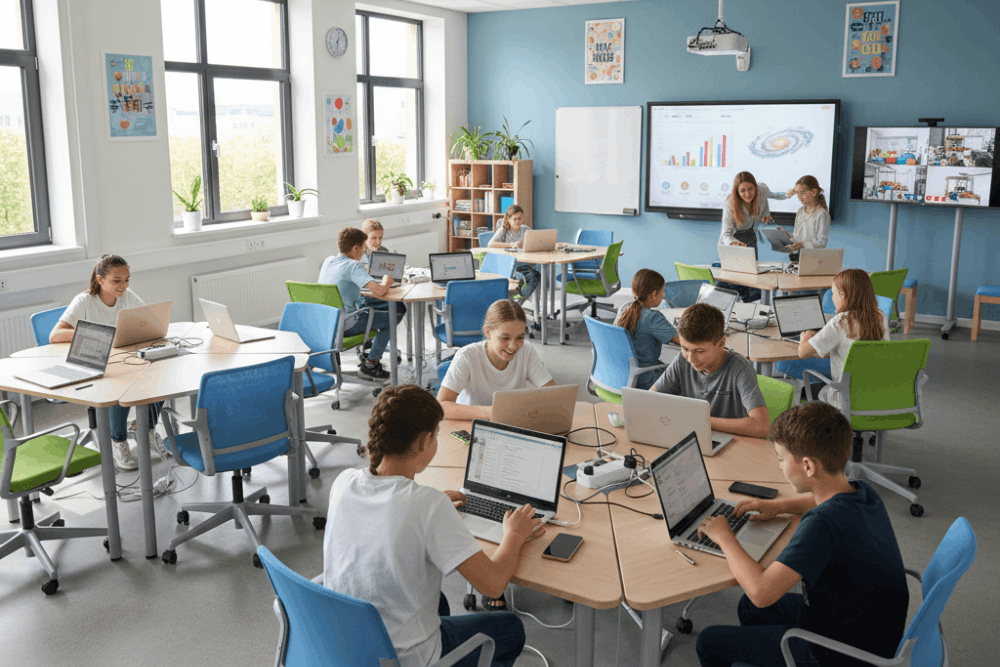
Do you know that technology has a significant impact on students’ academic performance? Yes, technology has completely transformed the way students learn and acquire knowledge. With the rise of technology, students have access to endless resources and tools that can greatly enhance their learning experience.
Today, I will discuss how technology helps students in their academic journey. These points will help you understand the importance of incorporating technology in education.
Access to a World of Information
One of the biggest ways technology helps students is by giving them instant access to information. Gone are the days when learners needed to spend hours flipping through heavy textbooks. Now, with just a few clicks, students can search for details on almost any topic using the internet. Whether it’s looking up facts for a science project or reading up on world history, the information is always close at hand.
Furthermore, educational websites, online libraries, and video tutorials make learning much more interactive and enjoyable. Students of all ages can watch clear explanations, see diagrams, and learn concepts at their own pace. This means if someone needs extra help, they can simply re-watch a video or read additional materials online.
Improved Communication and Collaboration
Another important benefit is improved communication. In the past, group projects could be difficult to organize. But thanks to technology, students can work together using tools like Google Docs, Zoom, and other platforms. These tools allow them to share documents, chat in real time, and brainstorm ideas even if they aren’t in the same classroom or even the same city.
Teachers can also stay connected with their students through emails, learning portals, and social media groups dedicated to classwork. This direct line makes it easy to ask questions, submit assignments, and get feedback in a timely manner.
Personalized Learning for Every Student
Not all students learn the same way. Thankfully, technology makes it possible for learning to be more personalized. There are now many apps and software programs that adapt to a student’s abilities. For example, if a math app notices a student struggles with fractions, it can generate extra practice questions on that topic. On the other hand, if a student zooms past basic concepts, the app can offer more challenging lessons.
This approach helps students build confidence and learn at their own speed. So, everyone gets the support they need to succeed academically.
Keeps Students Engaged and Motivated
Let’s face it—sometimes traditional lessons can feel a bit boring. But when digital resources, games, and interactive activities are added, learning can become exciting! Educational games allow students to apply what they’ve learned while having fun. Earning badges, points, or certificates also keeps kids motivated to continue improving.
Even more, technology breaks up long lectures with hands-on activities, making it easier for students to stay focused throughout their lessons.
Preparation for the Modern World
It’s no secret that today’s world is driven by technology. Knowing how to use computers, tablets, and various software tools is a must. When students use technology in the classroom, they build digital skills that will help them both now and in their future careers. For instance, creating presentations, typing essays, or using spreadsheets are all vital skills for the workplace.
Moreover, students learn to work online safely and responsibly. Teachers can guide them on how to protect their privacy, detect reliable sources, and avoid misinformation—important lessons for anyone in the digital age.
Supports Students with Special Needs
Another powerful way technology helps students is by breaking down barriers for those with special needs. Assistive technologies, like text-to-speech programs, screen readers, and voice recognition software, enable students with learning challenges to participate fully in their education.
For example, a student who finds it difficult to write can use speech-to-text apps to complete assignments. Visual aids and interactive lessons can help students who learn better through pictures or videos rather than just text.
Makes Learning Flexible and Accessible
Technology has made education more flexible than ever before. Thanks to online classes and digital assignments, students can learn anytime and anywhere—at home, in a library, or even on the go. This is especially helpful for students who have busy schedules or need to balance schooling with other responsibilities.
Remote learning, for instance, has allowed students to continue their education even during unexpected events like the pandemic. With a laptop or even a smartphone, learning never needs to stop.
Encourages Creativity and Innovation
In the classroom, technology opens up many paths for creativity. With tools like graphic design software, online video editors, or coding platforms, students can turn their ideas into reality. Whether it’s creating a digital artwork, recording a podcast, or building a simple app, learning becomes much more than just memorizing facts.
Additionally, students are encouraged to think outside the box and try new things. This not only makes lessons more interesting, but it also builds problem-solving skills that are useful for life beyond school.
How Teachers Use Technology to Help Students
Teachers are always looking for ways to make lessons more engaging and effective. By using online quizzes, live polls, and interactive assignments, educators get real-time feedback on student progress. This way, they can quickly identify which topics need more attention and adapt their teaching.
Furthermore, teachers can connect with other educators worldwide to share resources and ideas. This leads to more innovative lessons and a richer classroom experience for everyone.
Challenges to Consider
While there are many positives, it’s important to recognize that technology can also bring challenges. Not all students have equal access to devices or high-speed internet at home, which can create gaps in learning. Schools and communities need to work together to close this digital divide, making sure that everyone gets the opportunity to benefit from tech in education.
Additionally, too much screen time can impact health. It’s important for students to take regular breaks and balance technology use with offline activities like sports and reading physical books.
Bottom Line
There are countless ways in which technology helps students in their education journey. Technology makes learning easier and more fun for students. It helps them find information quickly, learn at their own pace, and stay connected with teachers and classmates. With the right balance and support, technology can be a great tool for success in school.
Frequently Asked Questions
How does technology help students?
Technology helps students learn new things quickly, makes information easy to find, and lets them talk with teachers and classmates online.
Is technology good or bad for education?
Technology is good for education when used the right way. It makes learning easier and can help students do better in school.
Can too much technology be harmful?
Yes, too much screen time can be bad for your health. It’s important to balance technology use with other activities like exercise and spending time outside.
What are the best ways to use technology for studying?
Use educational apps, take notes online, and join virtual study groups. Make sure you use technology to help you learn, not distract you.
Does every student need a computer or tablet?
Not always, but having access can make learning easier. If you don’t have your own, many schools have computers that students can use.
How can parents help with technology use?
Parents can help by setting screen time limits, making sure kids take breaks, and guiding them to use safe, helpful websites.
Will technology replace teachers?
No, teachers are still very important! Technology is a tool to help teachers and make learning better for students.
