Volkswagen Parts Department: Your Complete Guide to OEM Parts and Service
So you’re hunting for Volkswagen parts, huh? Whether you’re a DIY mechanic working in your garage or just trying to figure out where to get that weird sensor replaced, the Volkswagen Parts Department is where the magic happens. Let me break down everything you need to know.
What Exactly Is a Volkswagen Parts Department?
The Volkswagen Parts Department is the official source for genuine VW parts at dealerships. These aren’t your random auto parts store knockoffs—we’re talking original equipment manufacturer (OEM) parts designed specifically for your vehicle.
Every authorized VW dealership has one. They stock everything from brake pads to entire engines, and what they don’t have, they can order directly from Volkswagen.
Here’s the real deal: these departments employ certified parts specialists who actually know VWs inside and out. They can pull up your VIN, tell you exactly which part fits your specific model year, and even catch compatibility issues before you waste money.
Why Use the Official Parts Department Instead of AutoZone?
Fair question. Aftermarket parts are usually cheaper.
Quality and warranty protection matter. OEM parts come with Volkswagen’s warranty and are manufactured to the exact specifications of your vehicle. That $50 you save on an aftermarket water pump might cost you $800 when it fails prematurely and damages your engine.
Perfect fit guaranteed. VW vehicles—especially newer models—have super specific tolerances. An aftermarket part that’s “close enough” can cause weird issues down the line. OEM parts eliminate that gamble.
Your vehicle warranty stays intact. Using non-OEM parts on a vehicle under warranty can give dealerships an excuse to deny future warranty claims. Why risk it?
How to Find Your Nearest Volkswagen Parts Department?
Dead simple. Head to the official Volkswagen website and use their dealer locator tool. Punch in your zip code, and you’ll get a list of authorized dealers near you.
Call ahead before making the trip. Seriously. Parts departments have different hours than the service department—some close earlier, some aren’t open on weekends.
Ask these questions when you call:
- Do you have [specific part] in stock?
- What’s the price, including any core charges?
- Can I pick it up today, or does it need to be ordered?
- Do you offer any parts warranties or guarantees?
What Services Does the Parts Department Actually Offer?
Part identification and ordering. Bring in your VIN or the old part, and they’ll match it exactly—no guessing games.
Over-the-counter sales. Walk in, buy parts, walk out. You don’t need to schedule service to buy parts for your own repairs.
Wholesale programs for shops. If you run an independent repair shop, many VW parts departments offer wholesale pricing and accounts.
Special orders for rare or discontinued parts. Need something for a 1987 GTI? They can hunt it down through Volkswagen’s classic parts program.
Accessories and upgrades. Want those fancy all-weather floor mats or roof racks? The parts department has you covered with VW-branded accessories.
OEM Parts vs. Aftermarket
Let’s cut through the noise here.
OEM parts are made by the same manufacturers that supply Volkswagen’s assembly lines. You’re getting the identical component that came in your car from the factory. The quality control is tight, the materials are correct, and the engineering is exact.
Aftermarket parts range from excellent to absolute garbage. Some aftermarket manufacturers make quality stuff—sometimes even better than OEM. Others cut corners on materials, tolerances, and testing. The problem? You can’t always tell which is which until it’s installed.
Price difference isn’t as crazy as you think. Yeah, OEM costs more upfront. But factor in potential labor costs if you need to redo the job with a failed aftermarket part, and suddenly OEM looks pretty reasonable.
For critical components—brakes, suspension, engine internals, electrical—stick with OEM. For basic stuff like wipers or air filters, quality aftermarket parts can save you money without risk.
How to Order Parts from Volkswagen?
In person: Walk into any VW dealership’s parts counter. Bring your VIN (it’s on your registration or the driver’s side dashboard). They’ll look up your exact vehicle and order the right part.
By phone: Call the parts department directly. Have your VIN ready. They can quote prices and availability immediately.
Online: Many dealers now have online parts ordering through their websites. You can browse, order, and pick up without talking to anyone. Some even ship directly to your house.
Through the VW app: Volkswagen’s official app lets you order parts and schedule pickup at your preferred dealership.
Delivery time varies. Common parts might be in stock for same-day pickup. Specialty items could take 2-10 business days. Rare or discontinued parts might take weeks if they’re even available.
Common Parts People Search For
Brake pads and rotors: High-wear items that need replacement every 30,000-70,000 miles, depending on driving style.
Oil filters and air filters: Regular maintenance items. Cheap insurance for engine longevity.
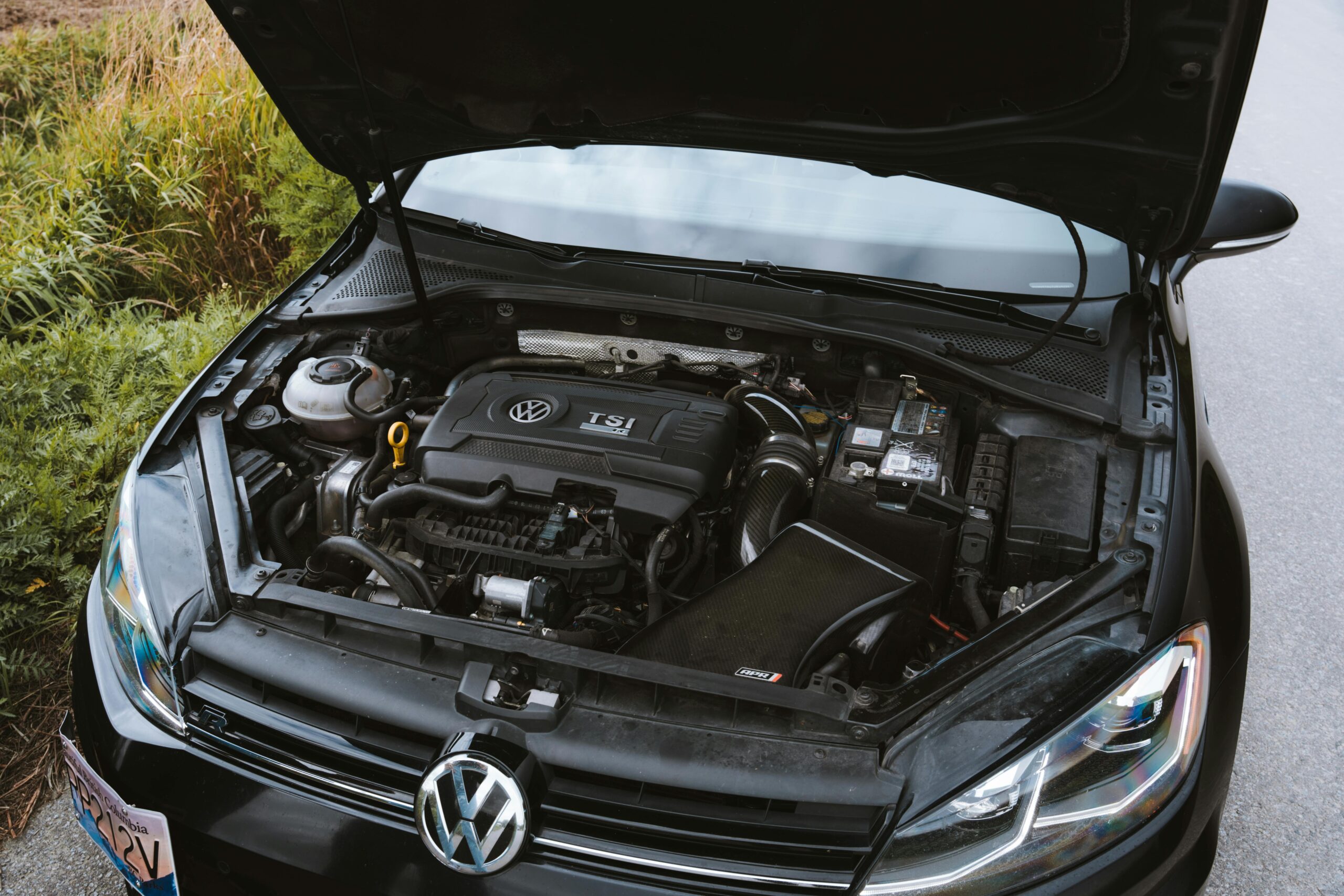
Spark plugs and ignition coils: VWs are notorious for coil pack failures. Stock up if you have a high-mileage TSI engine.
Timing belts and water pumps: Critical maintenance items. Always replace them together around 100,000 miles.
Window regulators: VW power windows fail—a lot. Keep the parts department number handy.
Mass airflow sensors: Another common failure point on VAG engines.
Fuel injectors and fuel pumps: Especially on direct injection engines.
Understanding VW Part Numbers
Every Volkswagen part has a unique part number. They look like gibberish—something like “06K 905 110 D”—, but they’re actually a precise code.
The first three digits typically indicate the parts group or system. The next three digits specify the exact component. The letter at the end shows the revision or generation of that part.
Why this matters: Sometimes Volkswagen updates a part to fix a common failure point. The newer revision will have a different letter suffix. The parts department can tell you if there’s an updated version of the part you need.
Cross-referencing is your friend. Many VW parts fit multiple models and years. A Golf part might work in a Jetta. The parts specialist can check these cross-references and find your part cheaper or faster.
Warranty Coverage for VW Parts
OEM parts bought from the Volkswagen Parts Department come with a 12-month/12,000-mile warranty when installed by a certified VW technician.
If you install them yourself, you still get a warranty on the part itself—usually 12 months from the purchase date. But labor isn’t covered, and you’ll need to prove the part failed, not your installation.
Keep your receipts. Seriously. No receipt, no warranty claim. Take a photo and email it to yourself for backup.
How Much Do Volkswagen Parts Actually Cost?
Prices vary wildly depending on the part, your location, and current promotions.
Maintenance items: Oil filters run $8-15. Air filters are $20-40. Spark plugs are about $10-20 each.
Wear items: Brake pads range from $60 to $150 per axle set. Rotors are $50-120 each. Tires aren’t sold through parts departments, but TPMS sensors are around $60 each.
Major components: Timing belt kits with water pump run $300-600. Turbochargers can hit $1,500-3,000. Transmissions are in the $3,000-8,000 range, depending on model.
Check for parts specials. VW dealerships run monthly promotions—usually 10-20% off certain categories. Sign up for their email list.
Can Independent Mechanics Use VW Parts Departments?
Absolutely. Independent repair shops use dealer parts departments all the time.
Many shops prefer OEM parts for customer satisfaction and warranty reasons. They’ll have wholesale accounts set up for faster ordering and better pricing than retail customers get.
As a regular customer, you can still buy parts and take them to your trusted mechanic. Just make sure they’re willing to install parts you supply—some shops won’t for liability reasons.
Digital Tools and Resources
VW Erwin: This is Volkswagen’s official parts and service information system. It’s subscription-based and mainly for professionals, but it’s the gold standard for finding exact part numbers and specifications.
ETKA: The older parts catalog system. Still referenced by some parts departments for classic VWs.
Dealer websites: Most modern VW dealers have online parts catalogs where you can search by VIN or part number.
Mobile apps: The MyVW app includes parts ordering capabilities at participating dealers.
What About Performance Parts?
The parts department stocks Volkswagen Accessories—factory-approved upgrades like sport springs, exhaust systems, and body kits.
For serious performance modifications, you’re better off with specialty tuning shops. The parts department focuses on OEM replacement and mild factory upgrades.
But here’s a pro tip: Ask about VW Motorsport parts. Some dealers can special-order factory racing components not available to general consumers.
Getting the Best Deal on VW Parts
Shop multiple dealers. Part prices can vary between dealerships. Call three or four and compare.
Ask about price matching. Some dealers will match online prices or competitor quotes.
Buy in bulk. Planning a big maintenance job? Order everything at once and ask for a discount.
Timing matters. End of month, end of quarter—parts departments have sales quotas too. They might be more flexible on pricing.
Check online VW parts retailers. Sites like VW Parts Vortex or ECS Tuning sell genuine OEM parts at wholesale pricing. You’ll wait for shipping, but savings can be significant.
Core Charges and Returns
Some parts—batteries, alternators, starters—have core charges. You pay a deposit that’s refunded when you return the old part.
Return policies vary by dealer. Most allow returns within 30 days if the part is unused and in original packaging. Electrical parts often can’t be returned once installed.
Special orders are usually non-refundable. That obscure trim piece you ordered for your ’95 Passat? You’re stuck with it.
Questions to Ask Your Parts Department
“Is there an updated version of this part?”
Get the latest revision to avoid known issues.
“Do you have any remanufactured options?”
For expensive components like transmissions, reman can save serious money.
“What’s the warranty on this part?”
Know your coverage before buying.
“Can you check if this part is discontinued?”
If it is, order extras while available.
“Are there any technical service bulletins related to this repair?”
They might know about common problems or updated procedures.
The Bottom Line on Volkswagen Parts Departments
Your Volkswagen Parts Department is the most reliable source for keeping your VW running right. Yes, you’ll pay more than rock-bottom aftermarket prices. But you’re getting guaranteed compatibility, quality assurance, and warranty protection.
For critical repairs and anything covered under warranty, stick with OEM parts from the dealer. For basic maintenance on older vehicles out of warranty, you’ve got more flexibility to shop around.
The key is building a relationship with your local parts department. Find a specialist who knows their stuff, and you’ll have a valuable resource for the life of your vehicle.